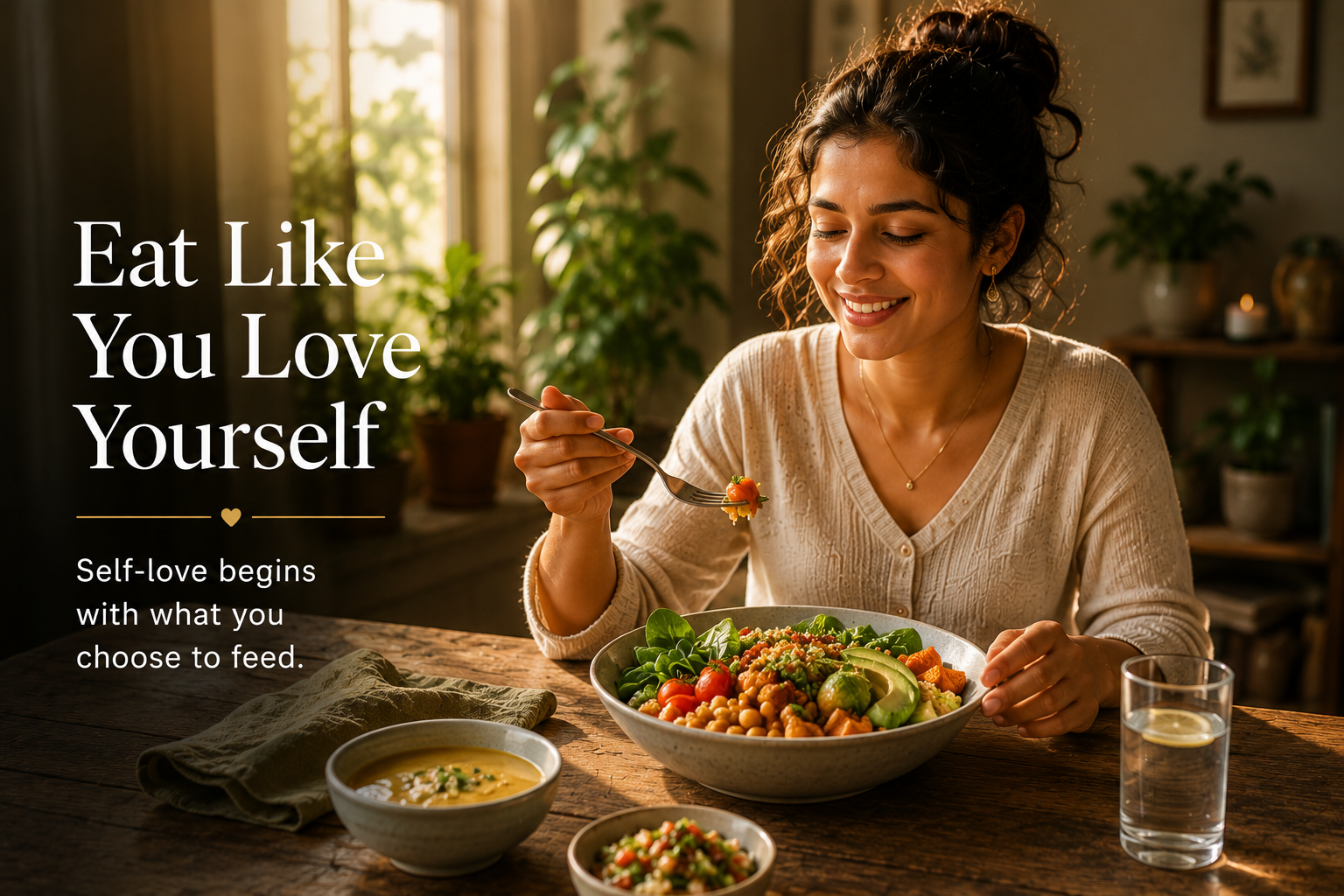
Eat Like You Love Yourself
To eat like we love ourselves is not to eat perfectly. It is not to follow every rule, count every bite, or turn food into a test of discipline. It is something softer and deeper. It is the decision to stop treating food as punishment and begin seeing it as a daily act of care.
Many people learn to relate to food through fear. We are told to avoid, control, restrict, compensate and correct. Somewhere along the way, eating becomes less about nourishment and more about judgment. A meal can become a report card. A craving can become guilt. A celebration can become anxiety. This is not love; it is pressure wearing the mask of health.
When food is approached with love, the conversation changes. We begin to ask different questions. Instead of asking only what will make us thinner, we begin to ask what will make us feel steady, alive, peaceful and cared for. Instead of eating to punish yesterday, we begin eating to support today. The body stops being an enemy to control and becomes a home to respect.
Eating like we love ourselves begins before the plate. It begins with the tone of the mind. The same meal can feel very different depending on the feeling with which it is chosen. Food eaten with fear may create tension even when it is nutritious. Food eaten with gratitude and awareness may create calm even when it is simple.
This does not mean every craving must be followed blindly or every habit must be justified. Love is not carelessness. Love is attention. It asks us to notice how food affects our energy, digestion, mood, sleep and sense of peace. It asks us to listen honestly without cruelty. It invites awareness instead of punishment.
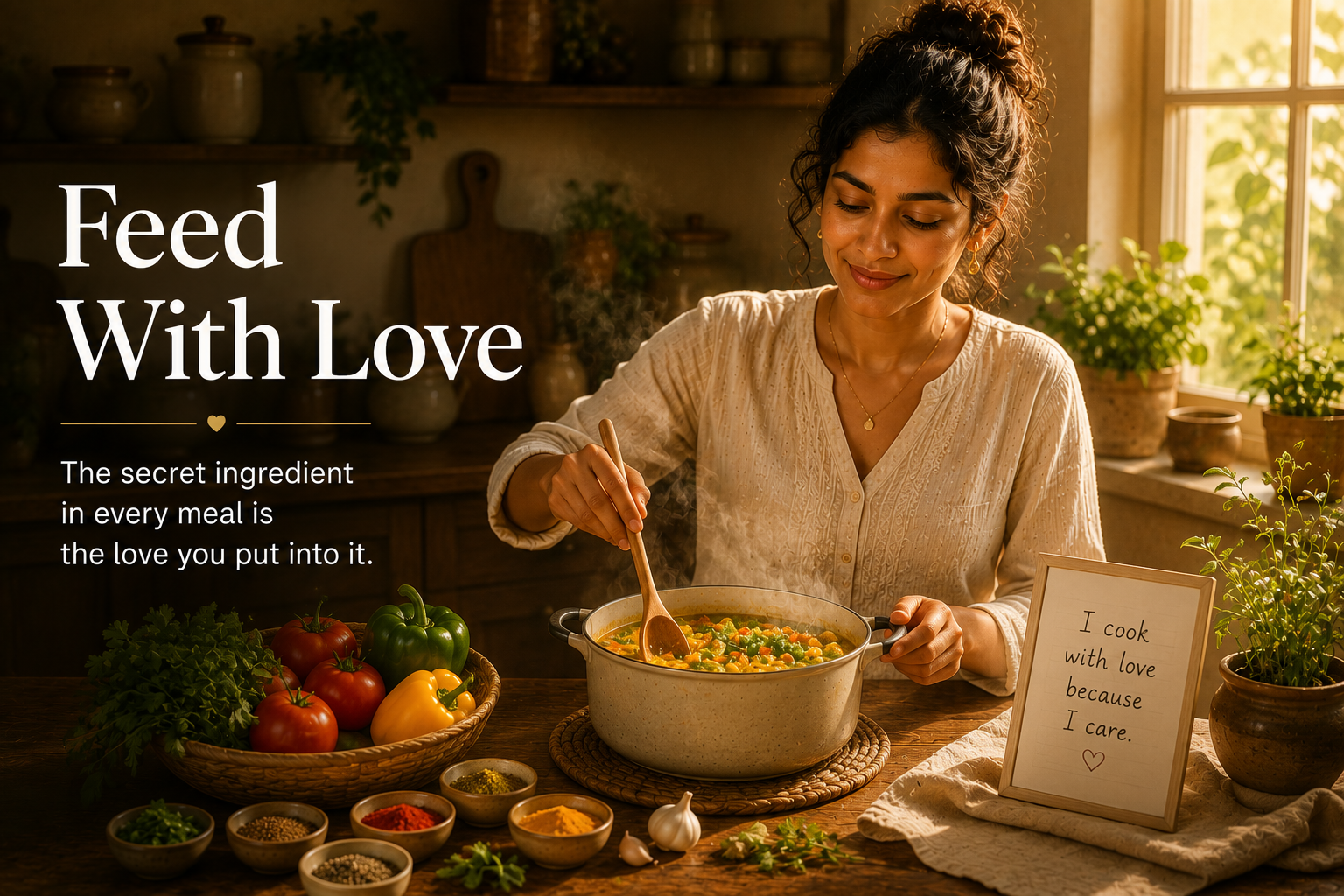
Home cooking can become a beautiful way to practice this. When we cook, we participate in our own care. We choose ingredients, adjust flavours, understand our hunger, and create something with our own hands. The act may be small, but the message to the body is powerful: I am worth the effort.
Even a ten-minute meal can carry this feeling. A bowl of dal, a simple khichdi, a warm sabzi, a quick salad or a comforting one-pot dish can become more than food when prepared with attention. The beauty is not in complication. The beauty is in the relationship we are rebuilding with ourselves.
Eating like we love ourselves also means removing shame from the table. There will be days of indulgence, days of convenience, days of celebration, days of tiredness and days of craving. Human life is not perfectly balanced every day. What matters is whether we return to awareness with kindness.
Food has the power to become a daily reminder of self-respect. Not because it must always look ideal, but because it can be chosen with care. Every meal offers a small chance to ask: What does my body need? What does my mind need? What would feel nourishing now?
When we eat like we love ourselves, food becomes less about control and more about connection. It becomes a way of saying, quietly and repeatedly, that this body matters, this life matters, and care can begin with something as ordinary as the next meal.
Continue the journey into food, feeling and philosophy. Happiness Now. Illness Never.




Join the Conversation